
Nitrous Oxide Sedation
A safe, gentle way to relax — calm within minutes, gone within minutes, and you drive yourself home.
If you feel anxious or uneasy about dental visits, nitrous oxide sedation — almost everyone calls it laughing gas — is a gentle and effective way to settle those nerves. At SmilePro Dental in Dearborn Heights we use it to make ordinary appointments calm and comfortable for patients who would otherwise dread them.
It is the mildest sedation we offer, and for patients whose anxiety is genuine but not overwhelming, it is very often enough on its own.
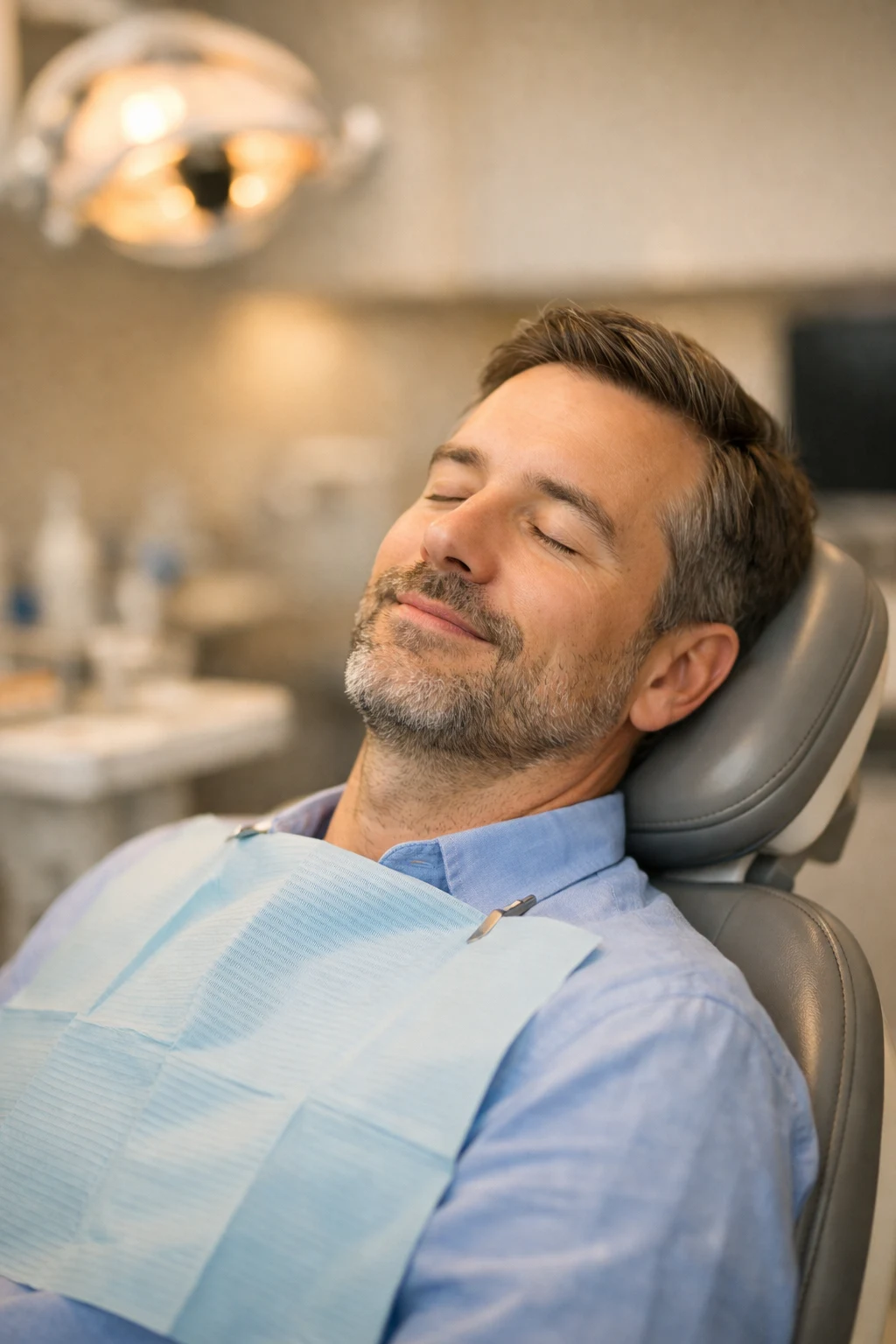
What is nitrous oxide sedation?
Nitrous oxide is a colourless, odourless gas breathed in through a small mask that sits over your nose — not your mouth, so your dentist still has clear access to work. Mixed with oxygen, it produces a settled, relaxed feeling while you stay fully conscious and aware of what is happening around you.
Once the mask comes off the effects fade quickly, and you can go straight back to your normal activities. That rapid on-and-off is what separates nitrous from every other sedation option.
Benefits of nitrous oxide sedation
Fast-acting relaxation
The calm arrives within a few minutes of putting the mask on — there is no tablet to take an hour early and no waiting around.
No needles or IV
Nothing is injected to sedate you. You breathe a gas mixture through a small nose mask, which is why it suits patients who dread needles.
Suitable across ages
Nitrous is used routinely for children, teenagers and adults who can breathe comfortably through the nose.
Adjustable during treatment
Because the gas is delivered continuously, the level can be raised at a difficult moment and eased back afterwards.
Quick recovery
A few minutes of pure oxygen at the end clears it from your system, and you can drive yourself home and carry on with your day.
Eases anxiety and sensitivity
It takes the edge off mild dental phobia and helps patients whose teeth or gag reflex make ordinary treatment uncomfortable.
Who can benefit from nitrous oxide?
Nitrous oxide tends to be the right choice for patients who:
- Experience mild to moderate dental anxiety
- Have a sensitive gag reflex that gets in the way of treatment
- Are having a shorter or more routine procedure
- Find it hard to sit still for an extended appointment
- Want sedation with no lingering drowsiness afterwards
- Cannot arrange a driver, since none is needed for nitrous
It is not the right option if you cannot breathe comfortably through your nose — a cold or blocked nose stops it working. Certain respiratory conditions and pregnancy also change the answer, which is what the health review covers. See the candidacy guide.
Is nitrous oxide safe?
Yes. Nitrous oxide is among the safest sedation options used in dentistry: it is non-addictive, its effects are easily reversed, and side effects are minimal. It has been used in dental practice for well over a century.
Our team monitors you throughout the appointment and adjusts the mixture as needed, so the level of sedation always matches what you actually require at that point in treatment.
What to expect during your visit
Starting the nitrous oxide
- A small, comfortable mask is placed over your nose.
- You breathe a mixture of nitrous oxide and oxygen, which settles you within a few minutes.
- The level is adjusted as needed as your treatment goes on.
During the procedure
- You stay awake and responsive, but calm and at ease.
- Some patients notice mild lightheadedness or a feeling of warmth.
- You still receive local anesthetic, so you feel no pain — you simply remain aware of your surroundings.
Recovery and aftercare
- The mask comes off and you breathe pure oxygen for a few minutes to clear any remaining gas.
- The effects wear off within minutes.
- You can drive yourself home and return to work, school or your normal day.
How to prepare for nitrous oxide sedation
- Eat lightly beforehand. A small meal a couple of hours before your appointment reduces the chance of nausea — neither starving nor stuffed.
- Tell us about your health. Every medical condition and every medication you take, including anything over the counter.
- Arrive on time. A few unhurried minutes to raise any last-minute worries makes a noticeable difference.
- No driver needed. Unlike our other sedation options, you can safely drive yourself home afterwards.
Frequently asked questions
Try the gentlest option first
If your dental anxiety is real but manageable, nitrous oxide is usually where we start. Book a consultation and we will tell you honestly whether it will be enough for the treatment you need.